What to bring on a night tour
Covers the rainforest at night, Asia's night markets and Mexico City, plus glowing bays and dark skies.
UpdatedThis page carries dated prices, start times or seasonal openings checked on the date above, and that window has now passed. Re-check the sources at the foot of the page before you book.
You don't need much for a night tour. But the things you need, you really need, and you can't buy them at 9 p.m. in a cemetery.
The basics are the same everywhere: shoes you can walk on uneven ground in, one more layer than the afternoon suggested, and a phone with enough battery to get you home. After that it depends on the tour. A London ghost walk asks almost nothing of you. A rainforest walk in Monteverde wants a rain jacket and bug spray. A Mauna Kea stargazing trip takes you to nearly 14,000 feet, where the mountain's stewardship office warns about freezing temperatures and 100 mph winds, on an island most people pack shorts for.
What's below comes from the tours' own product pages, the operators of the places they visit, and the CDC. Where a tour supplies the gear, we say so, because there's no point carrying a parka the van already has.
At a glance
- Every tour
- Closed shoes, a charged phone, one extra layer
- Boats
- A windproof jacket, even in summer
- Rainforest
- Rain jacket, long sleeves and pants, an EPA-registered repellent
- Mountains
- Real winter clothing; most Mauna Kea tours lend parkas
- Lights
- Most rainforest walks hand out flashlights; stargazing tours may ban them
- Leave behind
- Big bags, flash photography, sandals
On this page
Shoes: the one thing that ruins a night tour
Closed shoes with grip. Every time.
The dark hides kerbs, cobbles, steps and roots. Some tours put it in writing. The Georgetown ghost walk in Washington, DC warns about hills, uneven brick and steps. The Goodsprings ghost hunt outside Las Vegas requires closed-toe shoes. On Tenerife, the large-telescope stargazing tour bans open shoes, along with shorts. The Monteverde Cloud Forest Reserve's own night walk lists comfortable walking shoes first on its what-to-bring list.
Old towns are the sneaky ones. Florence, Prague and Lisbon look flat on a map and are anything but at night, on worn stone that gets slick after rain. Trainers are fine. New shoes are not; a two-hour walk is a bad place to break them in.
Dinner cruises are the exception. Bateaux Parisiens and the Budapest candlelit cruise both ask for smart casual, and a New York speakeasy tour on our list bans sandals and sleeveless shirts. Clean, closed, not hiking boots.
Layers: nights are colder than days, and water is colder still
Bring one more layer than you think. Night lows in the weather data on our city pages make the point. San Francisco averages about 46°F (8°C) on January nights and only about 56°F (13°C) on July nights, so summer evenings there are jacket evenings. Prague's January nights average about 28°F (-2°C). Chicago's, about 20°F (-6°C).
Boats are worse, because of wind. Every San Francisco Bay product we record warns about cold. Red and White tells you to bring a jacket for the upper deck; the Adventure Cat catamaran is cold and wet near the bow. The small-group skyline tour in New York says the Hudson waterfront is windy and cold. A jacket that stops wind matters more than a thick sweater.
Open vehicles too. The DC night tour in electric carts says the carts are open and unheated, so bring layers from October. The Las Vegas Neon Museum bus is cold on the top deck at night. Yes, in Las Vegas.
Ghost tours stand still a lot. Twenty minutes in one spot listening to a story is colder than twenty minutes walking. Ghost tour pages in Salem and Gettysburg tell you to dress for the cold, and a hat and gloves weigh nothing.
Mountains and stargazing: dress for winter, wherever you are
Mauna Kea is the extreme case. The Center for Maunakea Stewardship gives the visitor station at 9,200 ft and the summit at 13,796 ft, and says winter conditions can come at any time: freezing temperatures, winds over 100 mph, white-outs. It tells visitors to be prepared for winter weather and bring adequate cold-weather clothing. At 14,000 ft, it adds, there's 40% less oxygen than at sea level.
The good news is that the tours mostly dress you. Of the Mauna Kea products we rank, Hawaiian Eyes includes a snow parka, pants and gloves; Hawaii Forest and Trail a hooded parka and gloves; Mauna Kea Summit Adventures parkas and gloves; Hawaii Island Holidays a jacket and gloves; Taikobo a hooded parka. You still need warm layers, long pants, socks and closed shoes underneath. Bring a hat.
Two odd ones. Bring sunglasses and sunscreen: the same safety page lists intense solar radiation as a hazard, and you arrive before sunset. And check the health rules before you book, not in the van. The Stewardship advises against going above the visitor station if you're pregnant, under 13, or have been scuba diving in the last 24 hours.
Elsewhere: Amazing Maui Stars on Haleakala includes warm outerwear. On Tenerife's Teide, one tour supplies warm jackets only on its VIP pickup option, so on the standard one, bring your own. The Moab astrophotography tour says to bring a warm hat for the wind.
Rainforest night walks: rain, bugs and what the CDC says
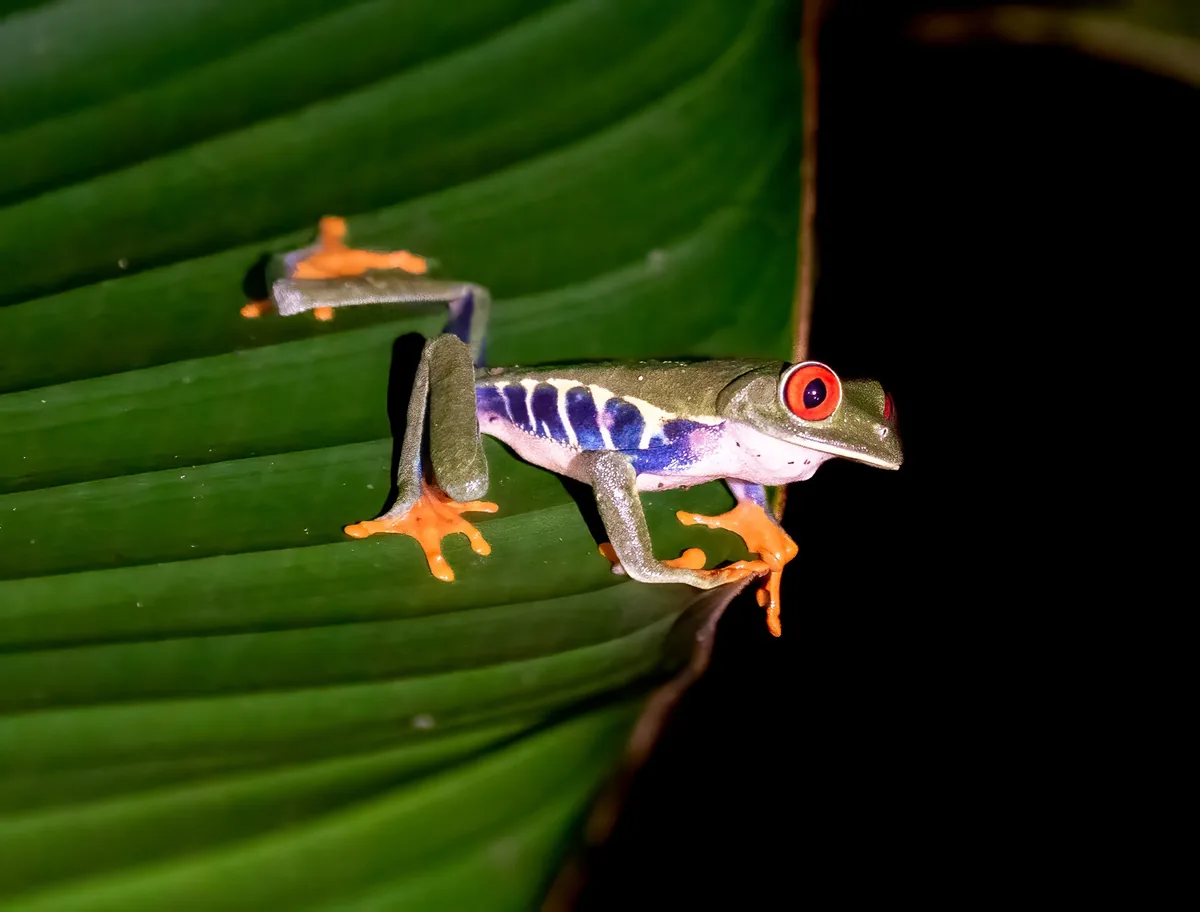
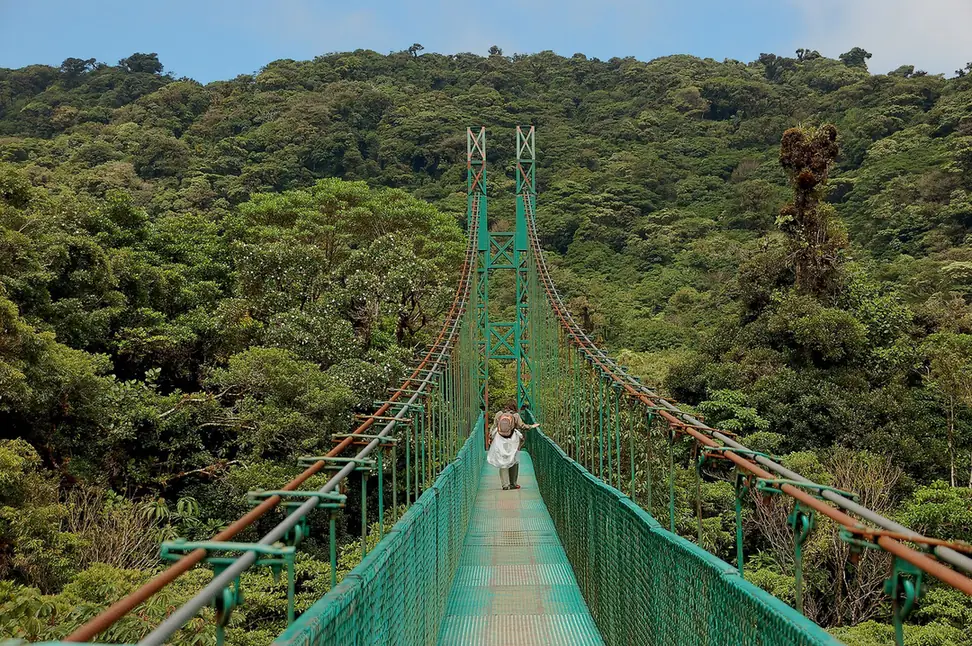
Costa Rica's night walks happen in rainforest, and the clue is in the name. Monteverde's weather data shows about 507 mm of rain in October across some 29 wet days; La Fortuna gets more than 600 mm in each of November, December and January. Most walks run in light rain. Bring a proper rain jacket, not a hoodie. Ficus Trails includes ponchos, and Papa's Place offers umbrellas, but don't count on it everywhere.
It's not hot at night, either, especially in Monteverde, which sits much higher than La Fortuna. Night lows there average 62 to 65°F (17 to 19°C) through the year, against 68 to 72°F (20 to 22°C) in La Fortuna. One Monteverde refuge walk says plainly that it gets chilly. Long sleeves solve both problems at once.
Now the bugs. The CDC's Costa Rica page lists dengue and Zika, both spread by mosquito bites, plus Chagas and leishmaniasis, spread by other insects. It says travelers to certain areas should take prescription malaria medicine and talk to a doctor about it before the trip. Vaccines can't protect against many of these, the CDC says, so your behaviour matters.
What the CDC recommends for avoiding bites:
- An EPA-registered repellent with DEET, picaridin, IR3535, oil of lemon eucalyptus (OLE), para-menthane-diol (PMD) or 2-undecanone.
- Sunscreen first, repellent second.
- Loose long-sleeved shirts and long pants. Permethrin-treated clothing helps and lasts through several washes, but permethrin never goes on skin.
- For children: no OLE or PMD under 3, and an adult applies repellent to their own hands first, then to the child's face.
The Sloth Watching Trail walk in La Fortuna asks for exactly this: bug spray, a rain jacket and closed shoes. In Singapore, Mandai suggests insect repellent for the Night Safari too. In Puerto Rico, Kayaking Puerto Rico includes it on its Fajardo bio bay tour, which tells you something.
Flashlights, cameras and phones
You probably don't need to bring a flashlight for a rainforest walk. Most of the ones we rank in La Fortuna and Monteverde list flashlights as included. Bring a small one anyway for the walk from the trailhead to your taxi, which isn't on the tour.
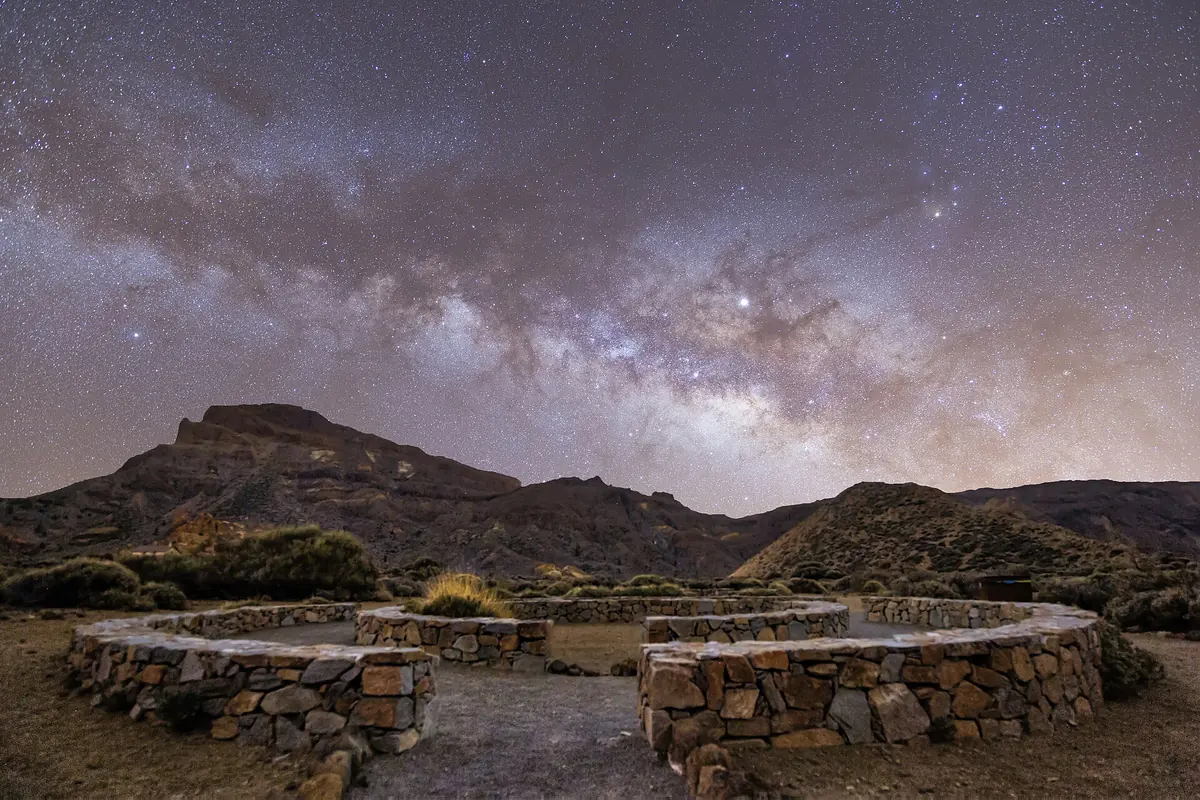
On a stargazing tour, don't. The Tenerife large-telescope tour bans flashlights outright, and the Moab tour hands out red-light headlamps instead. A white light in a dark field ruins everyone's night vision for a while. If you must bring one, bring a red one.
Flash is the other thing to switch off. Mandai asks you to turn off your camera's flash at the Night Safari because it can blind, disturb or startle the animals. Amsterdam's small-group Red Light District tour doesn't allow cameras at all, and photographing sex workers is prohibited. The Neon Museum in Las Vegas doesn't allow tripods.
Your phone is your map, your ticket, your taxi and your torch. Charge it fully, and if you're on a five-hour crawl or a Mauna Kea trip that drops you back near 11 p.m., carry a power bank. Kayak tours are the risky ones for phones. Cocoa Kayaking includes a dry bag. If yours doesn't, bring a waterproof pouch, or leave the phone with the van.
Going in the water? The Mareaito swim tour at La Parguera in Puerto Rico includes floats, towels and snorkel gear. That's a swimsuit-under-your-clothes tour.
Cash, ID and what isn't included
Read the exclusions. Night tours love a "drinks available" line.
- ID: the New York speakeasy tour is 21 and up with photo ID, and that means a passport for non-US visitors. Pub crawls check ages too.
- Drinks: that same speakeasy tour quotes about $10 to $14 (€8.90 to €12.50) for a beer and $18 to $25 (€16.10 to €22) for wine or cocktails, none included. On the Tokyo yakatabune dinner cruise, beer, sake and whisky are $3.20 (€2.80; ¥500) each, in cash.
- Fees: two Monteverde refuge walks contradict themselves about a $15 (€13.40) entry, so expect to pay it. On Mauna Kea, Taikobo's $20 (€17.90) Center for Maunakea Stewardship fee appears to be separate.
- Tips: some tours include gratuities and many don't. The product page says which. Small notes help.
Leave the big bag at the hotel. There's no luggage storage at Pier 33 for Alcatraz, and the Night Safari's medium lockers are $9.40 (€8.40; S$12) for three hours. A small crossbody bag, worn in front, is the right size for a night tour and the hardest for a pickpocket. Our night tour safety guide covers the rest.
Frequently asked questions
What should I wear on a ghost tour?
Closed shoes with grip, because you'll be on cobbles or uneven pavement in the dark, and a warmer layer than you'd wear walking, because ghost tours stop for long stories. In autumn and winter, add a hat and gloves.
What should I bring on a night walk in Costa Rica?
A rain jacket, long sleeves and long pants, closed shoes and an EPA-registered insect repellent such as DEET or picaridin, which the CDC recommends. Most tours include flashlights. In Monteverde, add a warm layer: night lows average 62 to 65°F (17 to 19°C).
How cold is it on Mauna Kea at night?
Cold enough for winter clothing. The Center for Maunakea Stewardship warns that freezing temperatures, winds over 100 mph and white-outs can happen at any time at the 13,796 ft summit. Most stargazing tours lend parkas and gloves, but bring warm layers and long pants underneath.
Do I need a flashlight for a night tour?
For city tours, your phone light is plenty. Rainforest walks in Costa Rica mostly include flashlights. Stargazing tours often ban white light, so bring a red light or none at all.
Can I take photos on a night tour?
Usually, but turn the flash off near animals: Singapore's Night Safari asks for that because flash can blind or startle them. Some tours ban cameras entirely, such as Amsterdam's small-group Red Light District walk.
Further reading
Official sources
- CDC: Costa Rica traveler health page – Dengue and Zika by mosquito, Chagas, leishmaniasis, malaria medicine for certain areas, checked October 26, 2026
- CDC: Preventing mosquito bites – EPA-registered repellent ingredients, sunscreen first, permethrin clothing, rules for children, checked October 26, 2026
- Center for Maunakea Stewardship: public safety – Freezing temperatures, 100+ mph winds, white-outs, cold-weather clothing, solar radiation, health restrictions, checked October 26, 2026
- Center for Maunakea Stewardship: important things to know – Visitor station at 9,200 ft, summit 13,796 ft, 40% less oxygen at 14,000 ft, checked October 26, 2026
- Maunakea Visitor Information Station (Institute for Astronomy) – Under-13s, pregnant women and people in poor health should not go above the station, checked October 26, 2026
- Monteverde Cloud Forest Reserve: visit the preserve – Night Walk what-to-bring list: walking shoes, rain jacket, camera, checked October 26, 2026
- Mandai Wildlife Reserve: Night Safari know before you go – Insect repellent, comfortable shoes, no flash, locker prices, checked October 26, 2026
- Alcatraz City Cruises: know before you go – No luggage storage at Pier 33, grip-soled walking shoes, checked October 26, 2026
- Open-Meteo historical weather API – Night lows and rainfall, 2016-2025 averages, as used on our city pages